
Watch or listen to the full conversation (77 minutes): YouTube · Spotify · Apple Podcasts · transcript
Episode two of Future Stories is out, and this is a topic close to my heart. I love history, and the Portuguese voyages of the 1500s most of all (I’m Portuguese, so I admit the bias). So when I was asked if I wanted to interview Henrique Leitão, a historian of science who has spent 25 years with the navigators, mathematicians and astronomers of the 1500s and 1600s, I didn’t think twice (turns out I’d been preparing for this one for years, without knowing it). I brought a long list of questions. We only got to it 30 minutes in. I left with a much longer list of things I didn’t know.
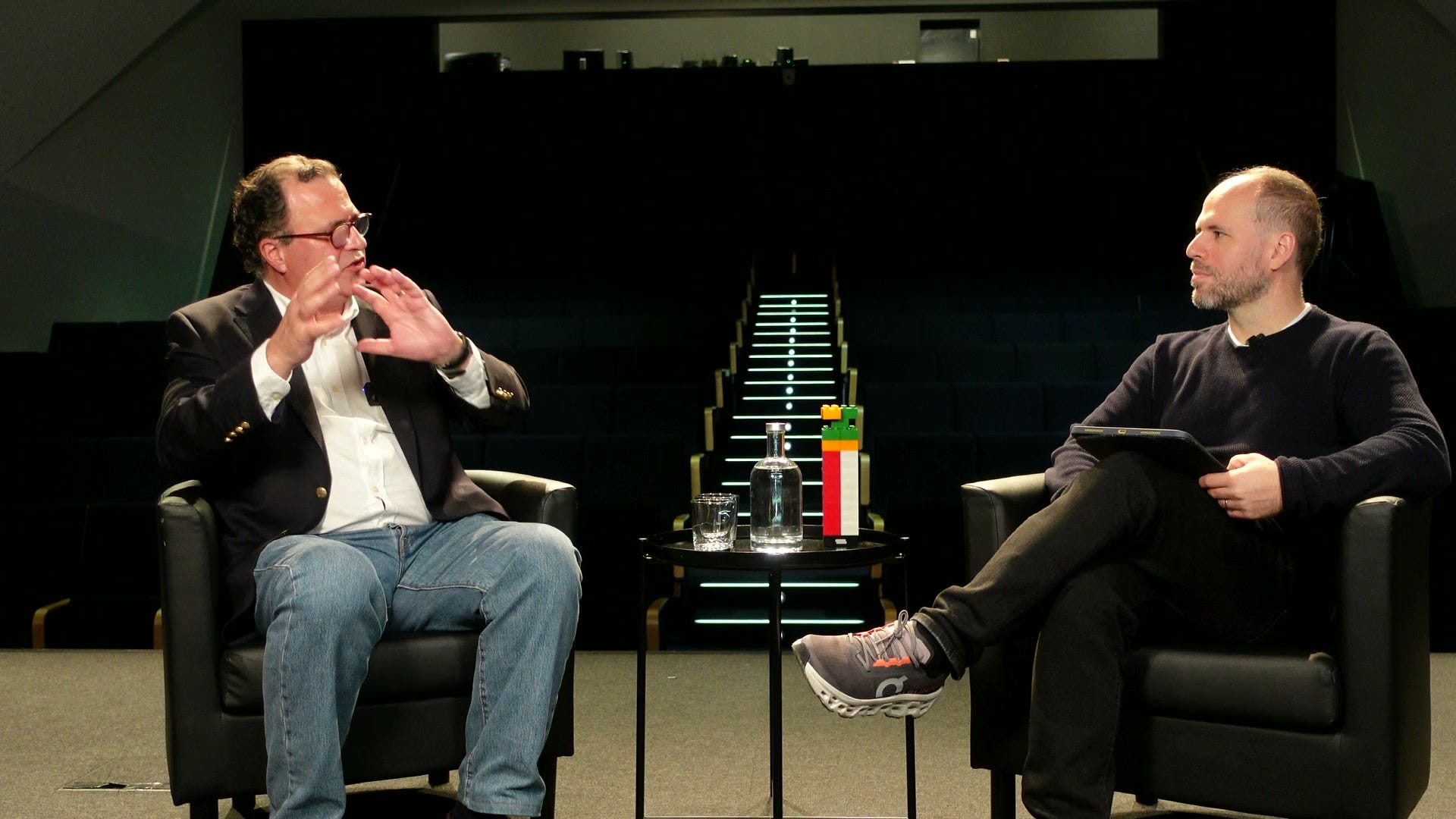
Henrique Leitão and me at the Pavilhão do Conhecimento, Lisbon, on November 20, 2026. Watch the full conversation.
“Entering an oceanic vessel in the 16th century was, for those people, a comparable experience as entering a spaceship today. Because you have so much technology just crammed together.”
This time it was in person, no Zoom, on November 20, in the auditorium of Lisbon’s science museum (Pavilhão do Conhecimento), with no audience (except Sara, the technician, out of sight). Henrique trained as a theoretical physicist before moving to history. He is Pro-Rector of the University of Lisbon and has just won the Ciência Viva Grand Prize 2026, Portugal’s main award for bringing science to the public. “Historians inhabit centuries,” he told me. “I am at ease in the 16th century.”
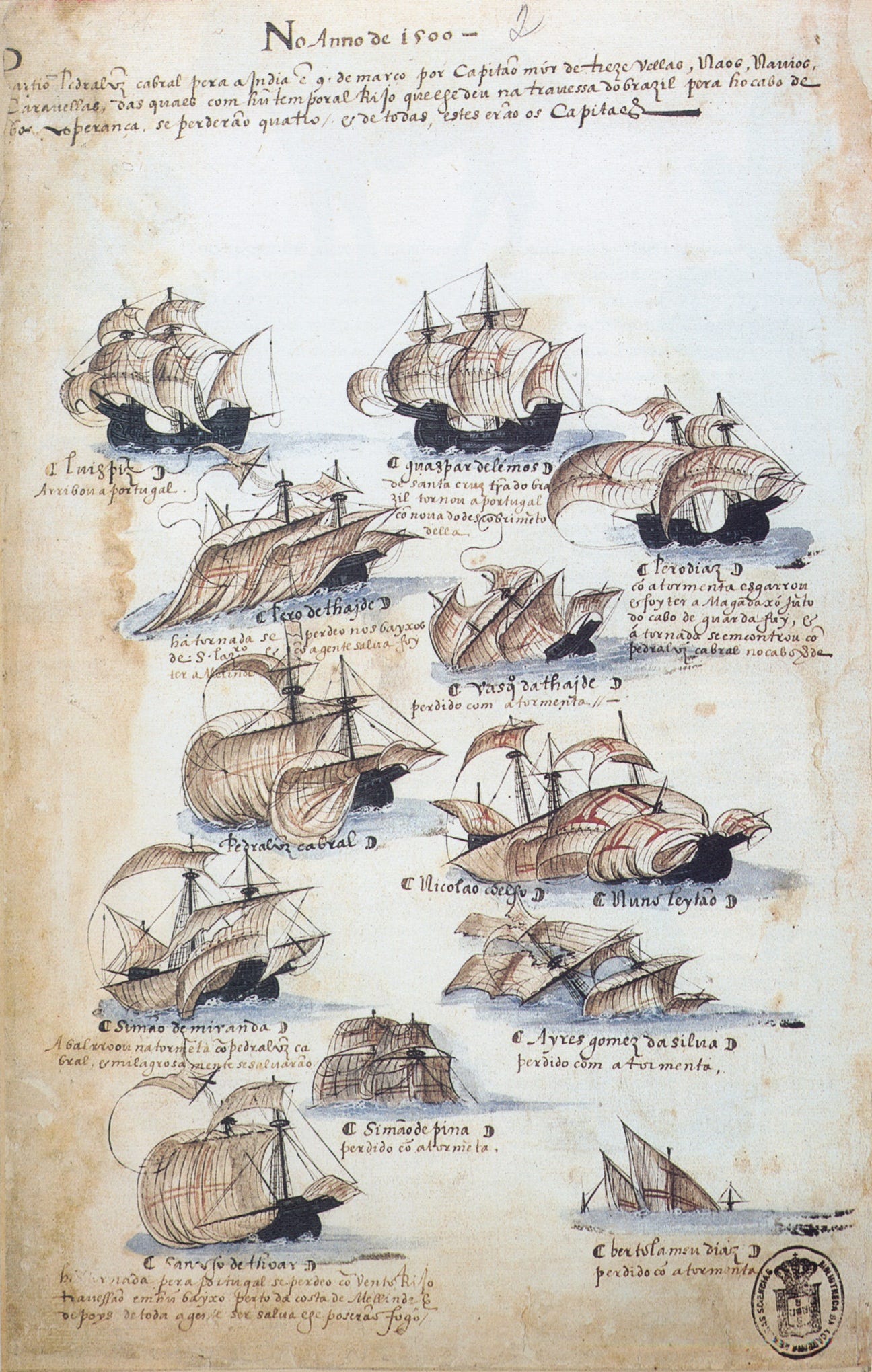
Cabral’s fleet of 1500, the one that reached Brazil, with the lost ships drawn sinking. Livro das Armadas, c. 1568, Academia das Ciências de Lisboa. Public domain, via Wikimedia Commons.
My favorite things I learned from the conversation:
A 16th-century ship was a spaceship
Picture a farmer in Portugal in the 1500s. In a whole life he might never see a scientific instrument. Then he boards a ship to India, and suddenly there are pumps, pulleys, levers, compasses, astrolabes and cannon everywhere. I had never thought about it this way.
The comparison comes from the Spanish historian Pablo E. Pérez-Mallaína, in Los hombres del océano (1992; in English, Spain’s Men of the Sea). Henrique read it and thought: bingo.
His point is bigger than the ship. Hundreds of thousands of Europeans sailed in the 16th and 17th centuries, living with technology in action for months. That changes how a society sees technology. Even the vocabulary shows it: every rope and knot has its own name, because at sea there is no room for “pass me that thing”.
“These voyages were not made by chance”
For thousands of years, European sailing stayed close to land. Then, in the 15th century, sailors from a small, poor, farming country at the edge of Europe went into the deep ocean, a little further on every voyage, until they reached the Indian Ocean and then Japan. Some routes meant months without the sight of land.
To do that, the court filled up with scholars from all over Europe, and mathematically trained people started showing up on ships, collecting data. For Henrique, the real surprise is that university people had to work with pilots, instrument makers and carpenters, something “very, very awkward in the history of Europe”. The success came from that match of theory and practice.
The mathematician Pedro Nunes wrote it down in 1537, in a treatise printed in Lisbon (Portuguese text here; my translation):
“They discovered new islands, new lands, new seas, new peoples and, what is more, a new sky and new stars. (...) Now it is clear that these discoveries of coasts, islands and mainlands were not made by guesswork. Our seamen left well taught and supplied with instruments and rules of astrology and geometry.”
(Astrology then also meant astronomy.) For Henrique, this is the first known text that links a country’s power and progress to science, an idea that later became the core of Francis Bacon’s program in England. He doesn’t claim Nunes influenced Bacon. His point is that the idea came out of the voyages.
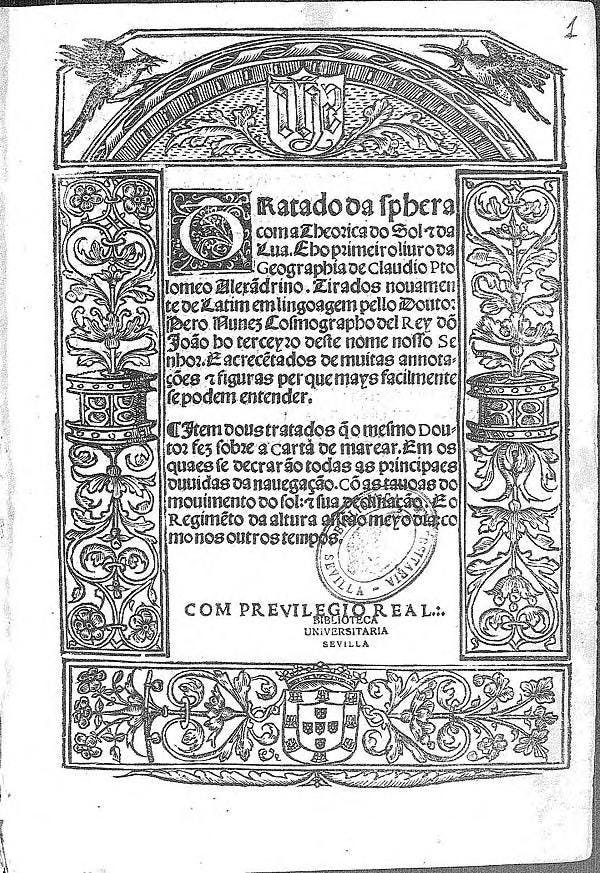
Title page of Pedro Nunes, Tratado da Sphera, Lisbon, 1537. Biblioteca de la Universidad de Sevilla. Public domain, via Internet Archive.
A spiral on a sphere, without calculus
Nunes (1502–1578) created mathematical navigation as a discipline. Open any navigation manual today, at sea or in the air, and you meet his two ideas. One is the great circle, the shortest path between two points on the Earth. The other is the rhumb line, the path you follow if you keep the same compass heading. Nunes showed they are different. Follow a constant heading long enough and you spiral towards the pole, circling it infinitely many times along a path of finite length. You have seen the practical answer: on Mercator’s map of 1569, the projection behind most web maps today, a rhumb line is a straight line.
As a physicist, Henrique knows the feeling of reading a paper by someone at the top of the field. He had it reading Nunes, 500 years later.
“Imagine, how can you study such a complex object without differential calculus? It’s a mathematical feat of the first order.”
He also called Nunes “the most important Portuguese scientist, period”. His other Portuguese hero is D. João de Castro (1500–1548), a sailor, scholar and viceroy of India he calls “completely incorruptible”, who measured on his voyages how far the compass needle strayed from true north.
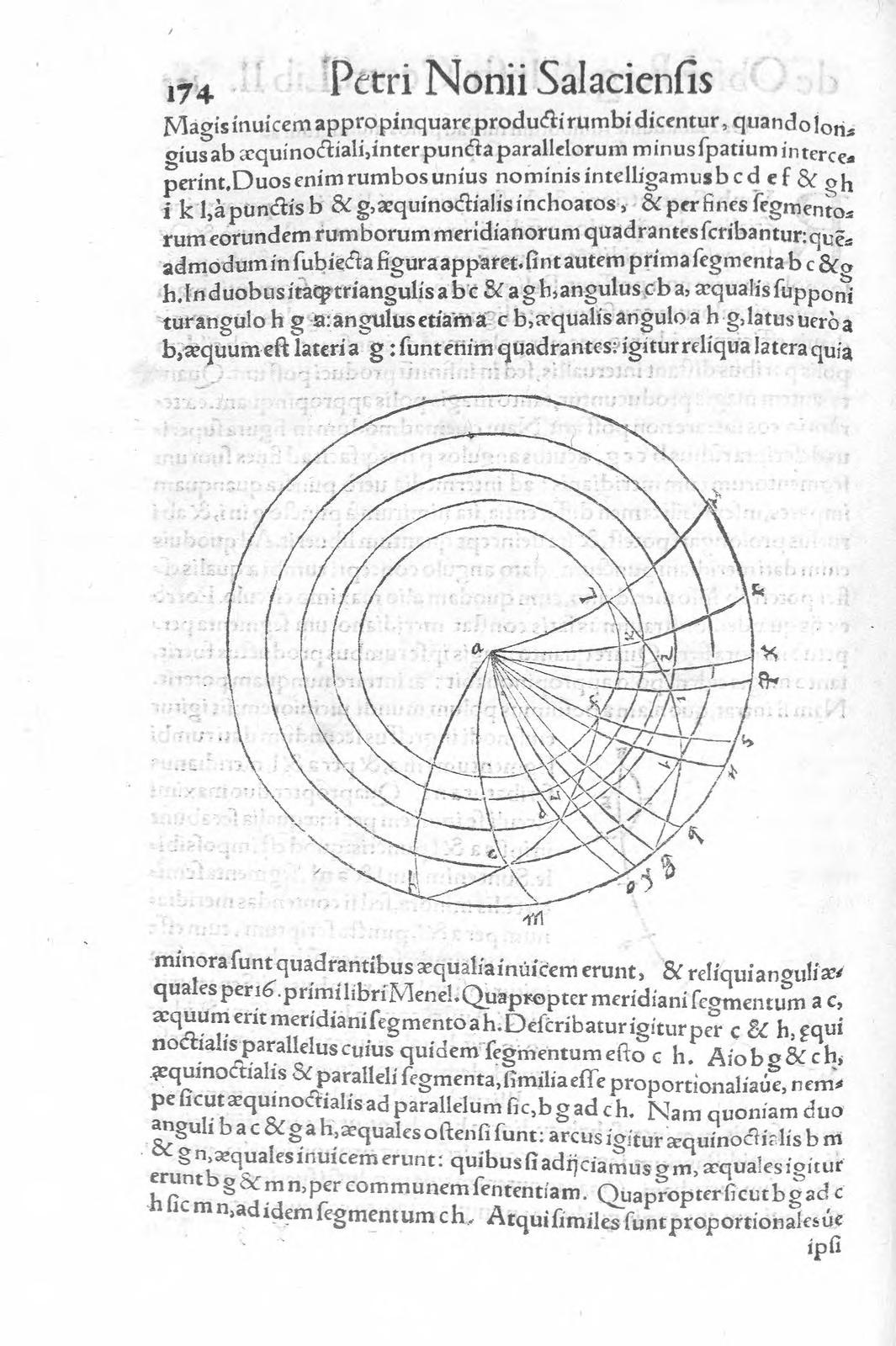
Rhumb lines approaching the pole, from Pedro Nunes, Opera, Basel, 1566, p. 174. Biblioteca de la Universidad de Sevilla. Public domain, via Internet Archive.
Information on a planetary scale, and what Lisbon lost in 1755
How did Portugal go from Vasco da Gama entering the Indian Ocean in 1497–98 to the Moluccas in 1512? Because from one voyage to the next, what was learned was not lost. Managing information was a central problem. Some historians call it collecting information on a planetary scale.
The center was in Lisbon, in the warehouses of India and Guinea, where logistics, administration and information came together. “In practice it did not work that well, but it did work,” he says.
Much of that paper is gone. The 1755 Lisbon earthquake, and the fire and tsunami that followed, destroyed the riverside area where it was kept. Spain’s equivalent, the Casa de la Contratación in Seville, left its records in the Archivo General de Indias; the Portuguese side has far less. Henrique doesn’t think the earthquake is the whole answer, but it is part of it.
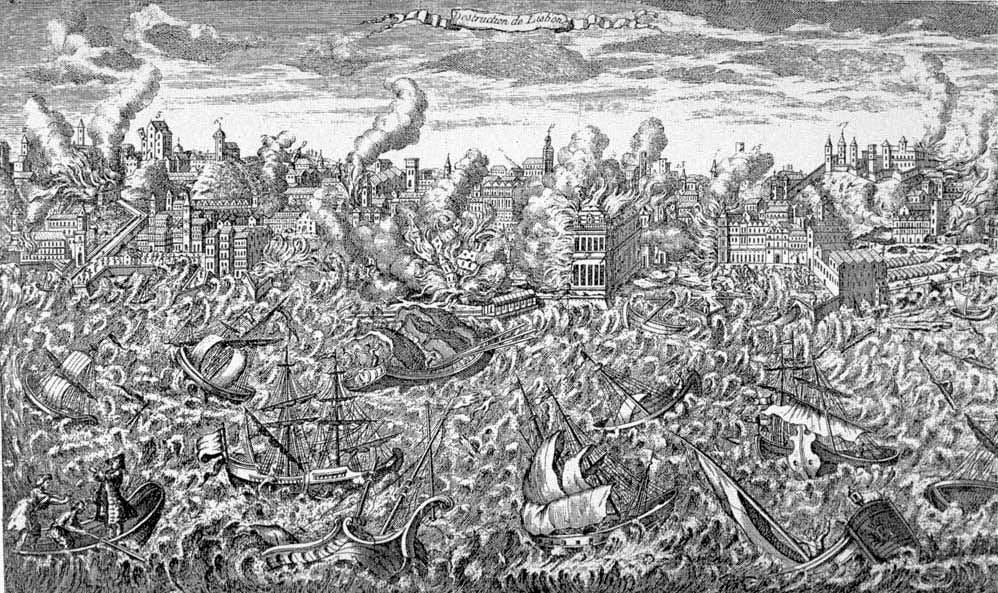
Lisbon in ruins and in flames, copper engraving, 1755. Museu da Cidade, Lisbon. Public domain, via Wikimedia Commons.
The kings tried to keep it all secret. It didn’t work. Everybody wanted a Portuguese pilot, and dozens of them worked for foreign crowns, changing employers like football players change clubs. “With people, information moves,” Henrique says. Nuno Vila-Santa, a researcher who worked with him, wrote a book on how it leaked, through diplomats and spies (open access). One famous leak: the Cantino planisphere, a Portuguese world map smuggled to Italy in 1502 by an agent of the Duke of Ferrara.
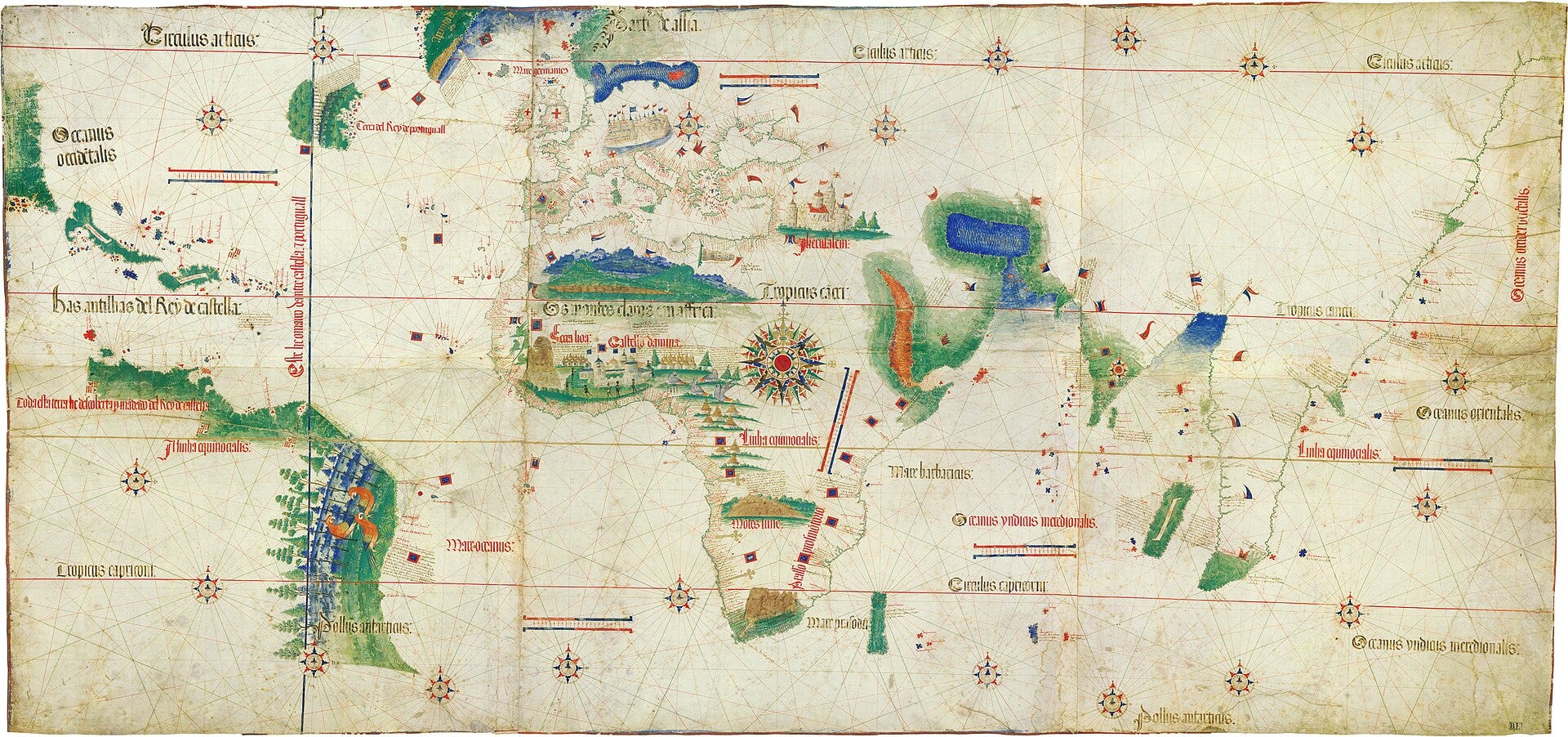
The Cantino planisphere, 1502, a Portuguese map smuggled to Italy. Biblioteca Estense Universitaria, Modena. Public domain, via Wikimedia Commons.
The logbook skips the mutiny
I asked about the strangest thing a pilot ever wrote down. His answer was about what they didn’t write. On Magellan’s voyage there was a mutiny in 1520, put down brutally. (One of the mutineers, Juan Sebastián Elcano, was the one who finished the voyage around the world.) The logbook goes through those days as if nothing happened: position, wind, position.
Other accounts are less dry. When the food ran out, crews hunted the rats on board, then cut the leather protecting the masts, cooked it and ate it. “We have many records of people saying: I will never do this again in my life,” going from Lisbon to India. “Many said: worse than a prison.”
Pilots who learned from each other
One of Henrique’s PhD students, Inês Bénard da Costa, reads both Arabic and Portuguese, and compared the sources of both sides to see who taught whom in the Indian Ocean. They learned from each other. Even when their rulers were enemies, pilots met in harbors and swapped charts and rutters.
Henrique doesn’t play down the violence. But a story of pure brutality doesn’t add up, he says, for a practical reason: when Afonso de Albuquerque took Malacca, in today’s Malaysia, he had about 1,000 to 1,500 Portuguese. Without diplomacy, that doesn’t work.
This one is personal for me. A few years ago I visited the Portuguese Settlement in Malacca. The Portuguese ruled the city from 1511 to 1641, and the Dutch and the British came after them. Yet the community that still calls itself Portuguese is there: Malaysians who never went to Portugal, with Portuguese surnames, singing old Portuguese lullabies I had never heard.
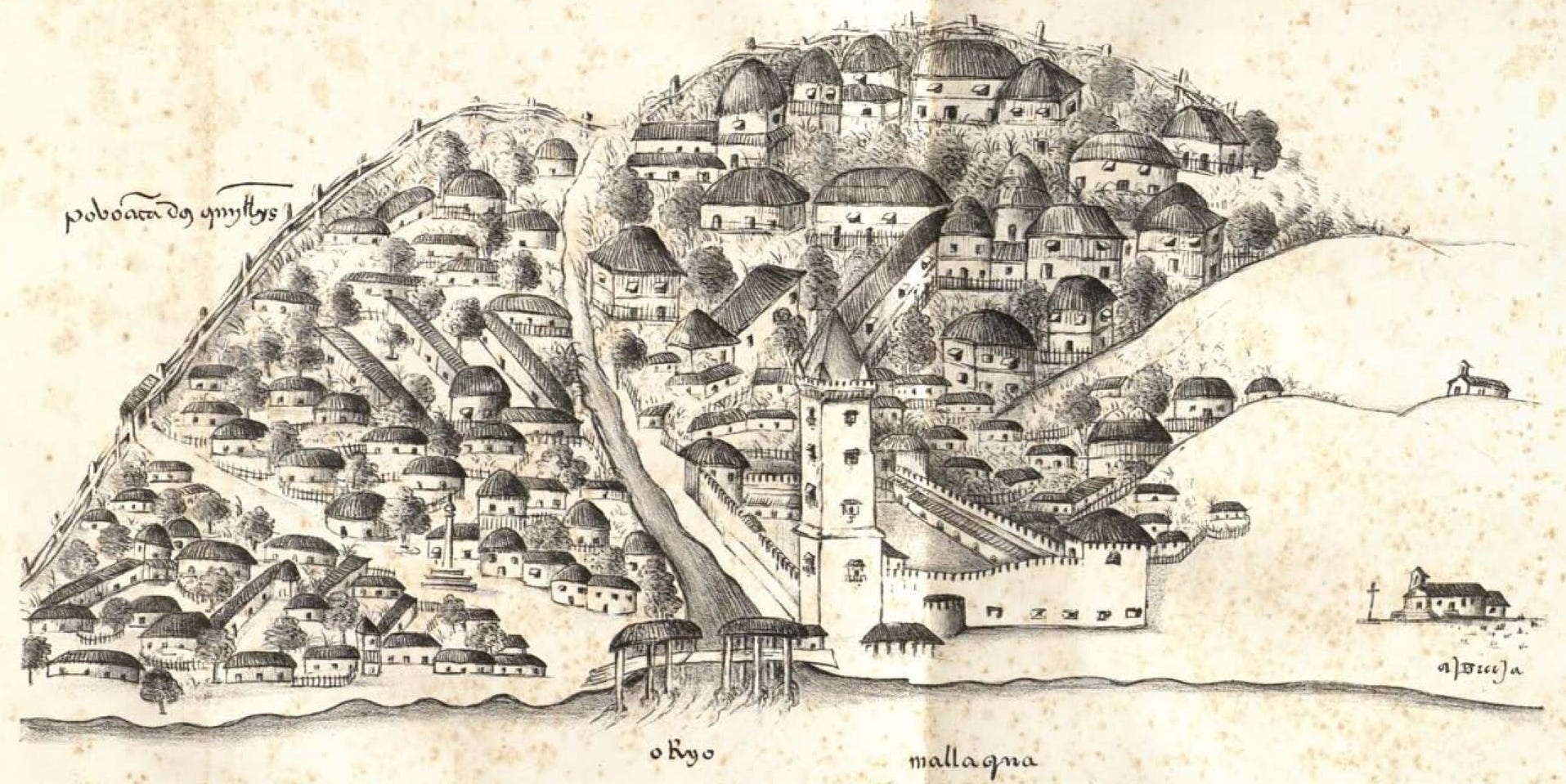
Malacca, after Gaspar Correia’s Lendas da Índia (16th century), as printed in 1858–1863. Public domain (CC0), via Wikimedia Commons.
Kepler, the extraterrestrial
Then I asked about his science hero outside Portugal. His answer: Johannes Kepler.
“From time to time, he just seems to be an extraterrestrial. (...) Everything he seems to have thought about for more than 10 minutes, there’s a major discovery coming.”
Most scientists improve on a tradition. Kepler, he says, jumps into a problem as if nobody had been there before. Henrique is now working on a short Kepler text from 1611 about snowflakes, written as a New Year’s gift for his patron. Kepler looked at a snowflake, saw it had six-fold symmetry, and asked why. You can’t really explain that without atoms. His explanations were wrong, but on the way he stated what became the Kepler conjecture on how to pack spheres most tightly, the way grocers stack oranges. Thomas Hales proved it in 1998 with the help of a computer, and the proof was formally verified in 2014.
He also likes Kepler as a person. Newton was brilliant, but “just a horrible person,” he says. “Galileo was not nice.” Kepler was a genuinely nice man.
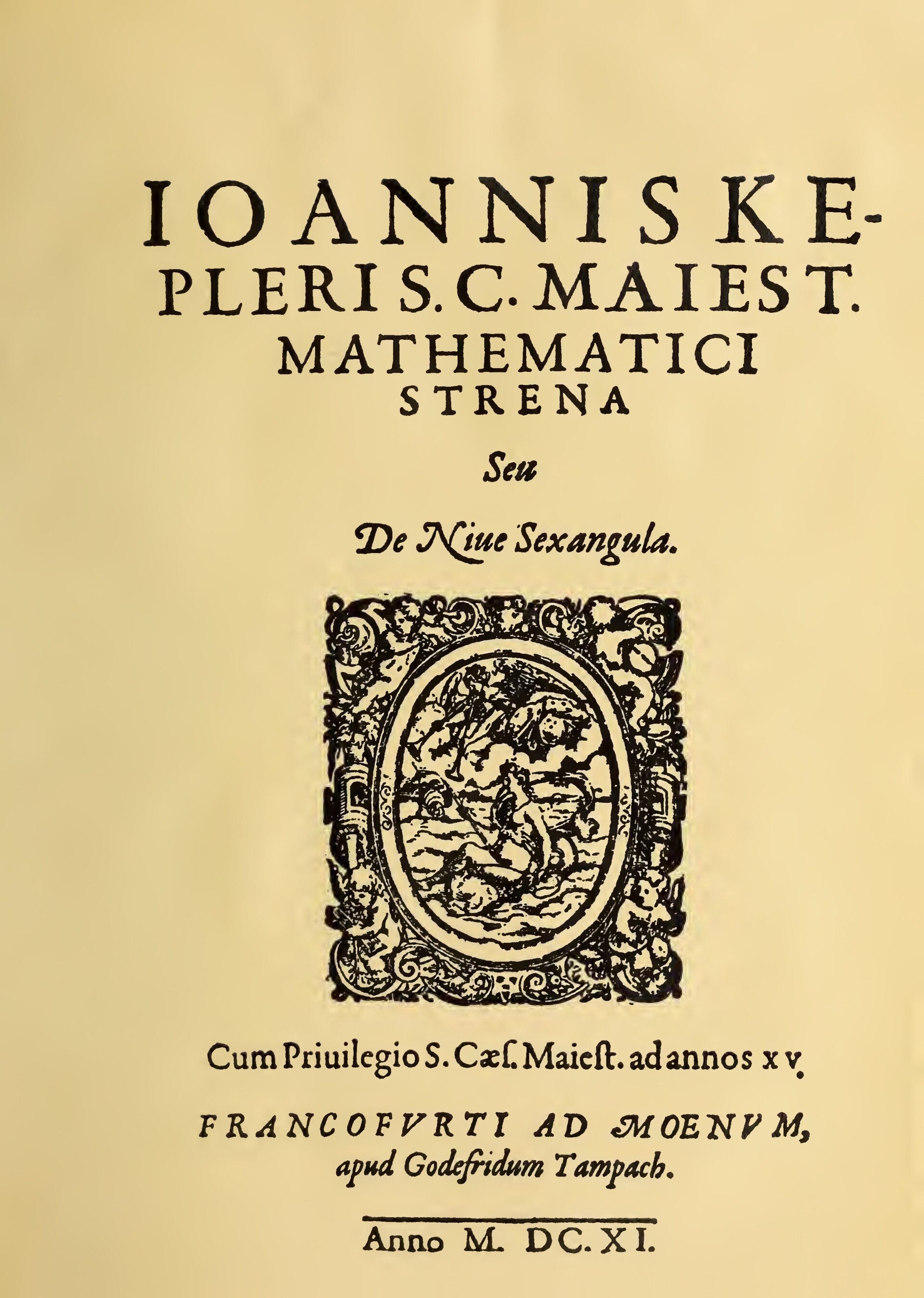
Title page of Johannes Kepler, Strena seu de nive sexangula, Frankfurt, 1611. Public domain, via Wikimedia Commons.
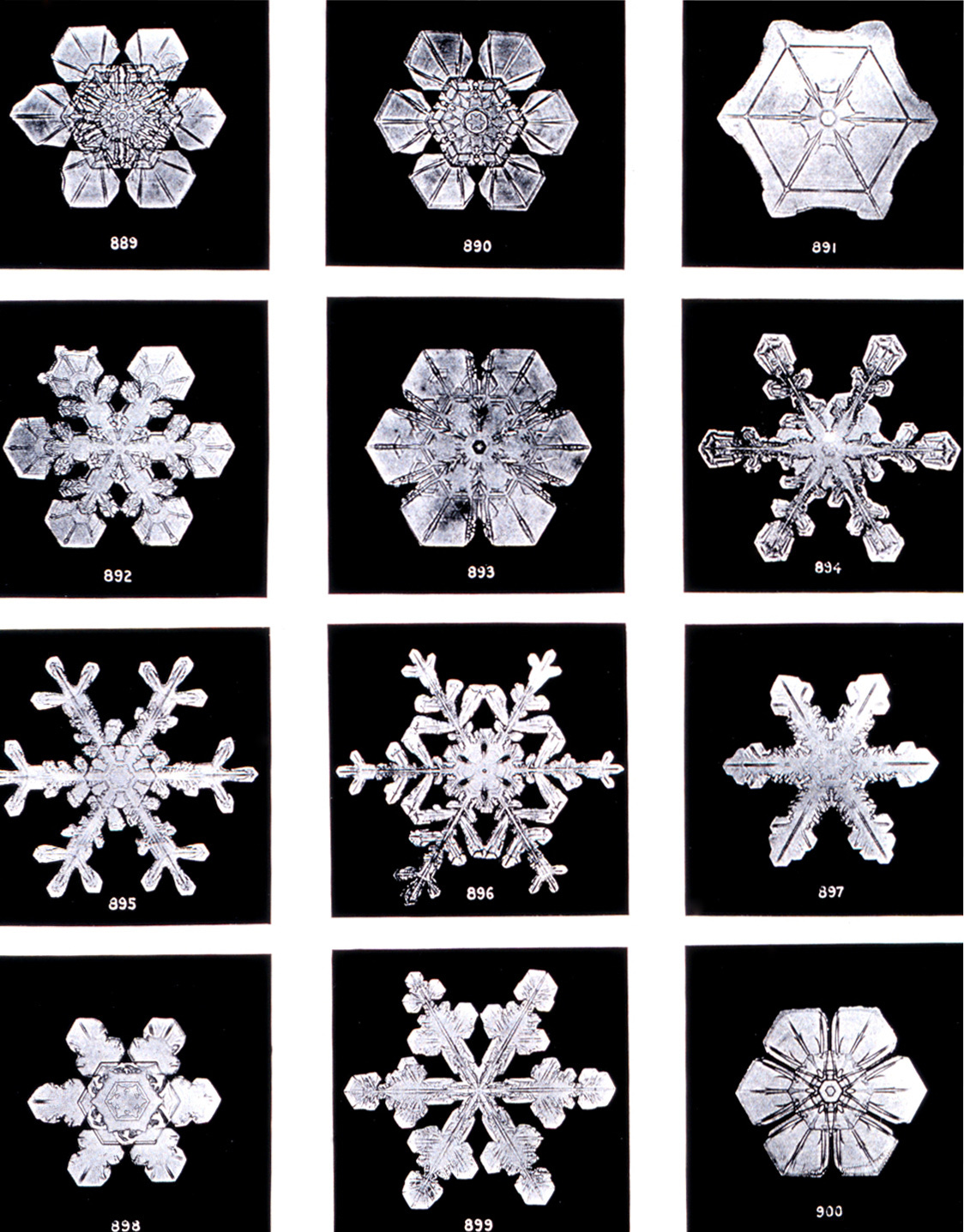
The six-fold symmetry Kepler asked about, photographed by Wilson A. Bentley in 1902. NOAA Photo Library. Public domain, via Wikimedia Commons.
And yes, the alien in the room
We also talked about AI. This month Henrique wrote an essay with the economist Pedro Santa Clara, “O Alien na rua” (The alien in the street, in Portuguese).
“The worst thing that you could do is to be distracted. Just pass through the alien, ask for a recipe to go to the kitchen, and this is it. Without even understanding the power that you have there.”
Unlike the ships, he sees no historical parallel for this. Mathematics took the first big blow, he says, and he named the date: October 6, 2026, when OpenAI announced 377 results produced by AI, including a claimed proof of the “quasi-Riemann hypothesis”. Mathematicians are still checking. As a historian, he is excited about AI that reads old handwriting, and about the Herculaneum scrolls, carbonized by Vesuvius in 79 AD and now being read without unrolling them.
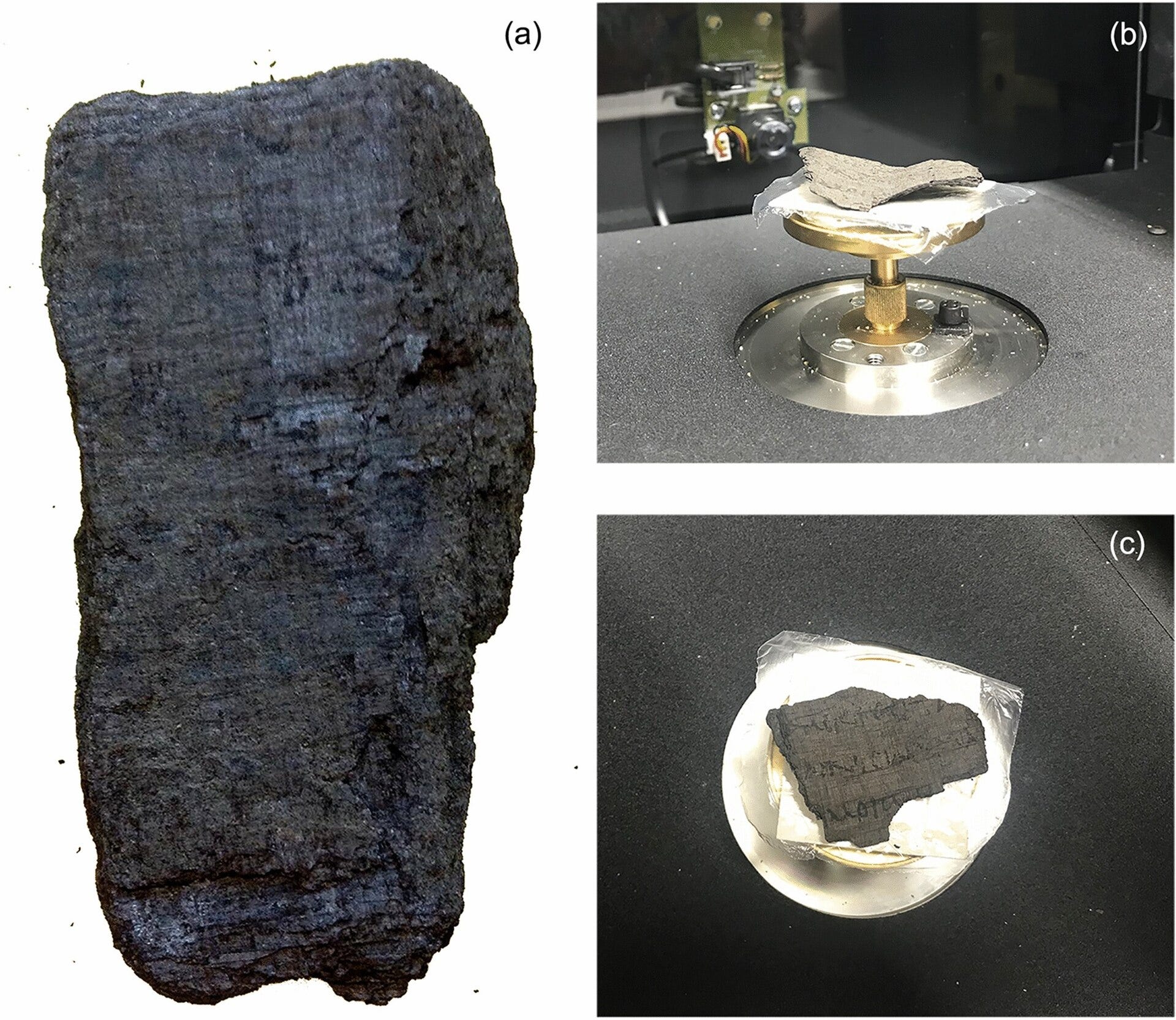
Carbonized Herculaneum papyri PHerc. 1103 and PHerc. 110. Stabile et al., Scientific Reports, 2021, CC BY 4.0, via Wikimedia Commons (resized).
My last question was what people in 100 years should understand about our time. His answer: “How disturbed we are.” He doesn’t think these are bad times. But since ChatGPT arrived in late 2022 we have lost our balance a little, asking what we are for if a machine can outdo us in any cognitive task. It will take a few years.
The full conversation is 77 minutes, with chapters, on YouTube and in your podcast app (ourfuturestories.eu/subscribe), with a transcript at ourfuturestories.eu. Episode one, with Vint Cerf, is here.
This is a passion project. The idea is to tell good stories, the kind that hold up over time. If you liked it, subscribe, share it with a friend, and tell me who I should talk to next. Henrique’s suggestion: a top mathematician, to ask what just happened to them.
Stay tuned, geek out!