
Rating: 8.5/10
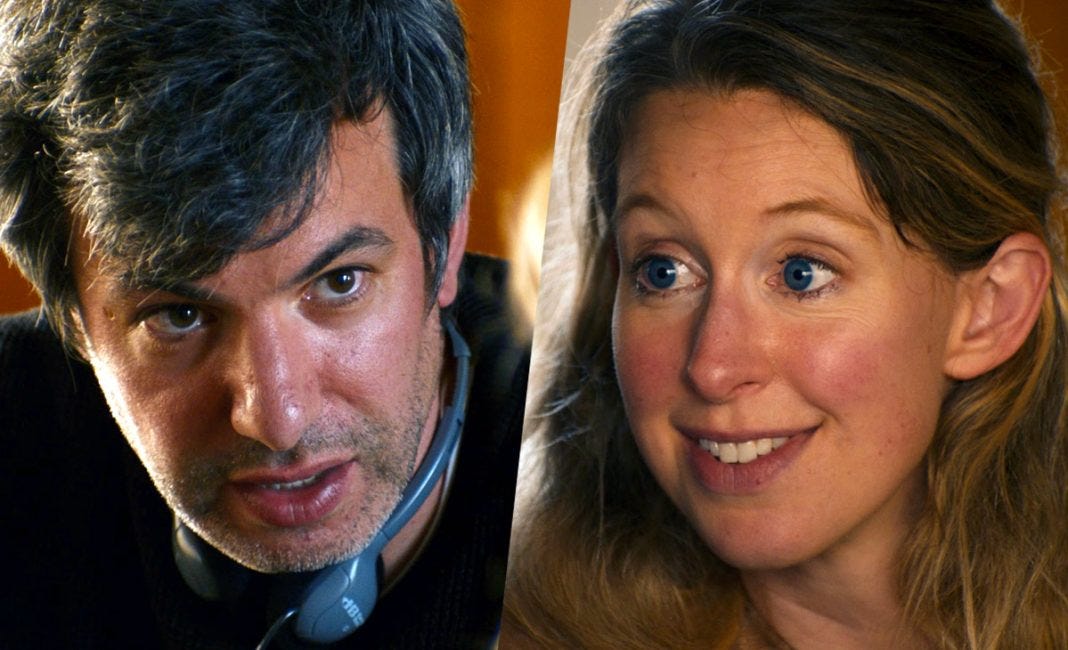
Until September 6, almost nobody knew this film existed. It premiered at a surprise screening at the Telluride Film Festival, in Colorado, and within weeks it became the documentary everyone was talking about: lines around the block at the New York Film Festival, first place at the US box office over Halloween weekend, European viewers catching flights to see it sooner. Portugal got lucky. The film opens there on November 12; Spain has to wait until Christmas Day.
“You Can See Everything”, by Nathan Fielder (who is also its main character) and Lance Oppenheim, makes us question what we are seeing, the people we are watching, and even our own ability to understand them. And it does so for almost three hours. It is a fascinating, sometimes uncomfortable piece of cinema, and one of the strangest and most memorable documentaries in years. Every viewer will leave with their own reading, as in a Rorschach test (the psychological test with inkblots in which each person sees something different). We take the film apart as we watch it, and that is part of the pleasure. It feels like honest filmmaking, one that doesn’t try to impose an interpretation.
At times it comes close to satirical comedy or a psychological thriller. Without a hint of action, it keeps us glued to our seats, wanting to know and see more. That is what the film is, above all: an experience to be lived (and felt).
Elizabeth Holmes, the founder of Theranos, promised to revolutionize medicine with machines that could run hundreds of lab tests from a few drops of blood. She won over investors, conquered Silicon Valley and was hailed as a kind of Steve Jobs of medicine. The technology never did what she promised. The company collapsed, Holmes was convicted of fraud and, in 2023, began serving a prison sentence in the United States.
Thirty-four days before reporting to prison, Holmes and her partner, Billy Evans, invited a film crew to follow their family life.
Anyone who knows Fielder’s work, especially “Nathan for You” and “The Rehearsal”, will recognize some of his trademarks: the awkward humor, the discomfort, the long pauses, the moments when we no longer know who is performing and who is being genuine. Some scenes feel lifted from a particularly strange reality show; others make you wonder whether any screenwriter could have imagined them. The most impressive part is how all of this becomes cinema.
A film that took its time, and it paid off
Fielder and Oppenheim are interested in the experience of being with these people, trying to understand them, and finding out how far that understanding can go. The film takes its time to reveal what it has to show. Sometimes, a long time. There is a deliberate wait, both in how the story is built and inside the scenes themselves.
Fielder has an unusual talent for letting silence do the work. He waits after an answer, looks at the person in front of him, waits a little longer. Often, it is in that gap that we start thinking about what we just heard.
The craft is remarkable. David Bolen’s cinematography, Adam Locke-Norton’s editing and, above all, Ari Balouzian’s score give the documentary a cinematic identity of its own. All three won at the Critics Choice Documentary Awards on November 8. The music takes us to different emotional places and gives seemingly ordinary situations an unexpected tension. Some images and moments stay with you long after the end (a few have already become memes).
The film could be half as long and still be interesting, but it would lose much of what makes it special. The silences, the detours and the long conversations are part of an experience you feel intensely.
The silences, the detours and the long conversations are part of an experience you feel intensely.
Elizabeth Holmes and her grip on reality
One of the most revealing sequences starts with a seemingly simple argument about the meaning of one word: can. Holmes had claimed that Theranos machines could run certain tests. But what did she really mean? That the machines could do it at that moment? Or that one day they might?
Fielder presses on the difference. Holmes looks for explanations, shifts the meaning of words and seems unable to see the contradiction. The conversation becomes so absurd it almost feels like a comedy sketch.
And that is exactly where Fielder decides to go. He shows her Abbott and Costello’s famous “Who’s on First?”, an old comedy routine built on confusion over the names of baseball players. Who plays first base, What plays second and I Don’t Know plays third. Holmes laughs, but when Fielder asks her to explain the joke, she doesn’t seem to have understood it.
Holmes seems to have a peculiar relationship with words and with the reality they stand for. When it suits her, she finds alternative meanings to justify statements that look plainly false to everyone else. And yet she struggles to follow a joke built precisely on the ambiguity of words.
Does she really believe what she says? How well can she tell a promise from a concrete reality? Fielder never finds a definitive answer, and neither do we.
Fordham University psychologist Barry Rosenfeld offered one reading after watching the film: he found Holmes’s behavior manipulative, while cautioning that diagnosing someone from a documentary would be inappropriate. It is an interpretation, not a definitive answer.


Silicon Valley and the stories that move the world
The documentary also made me think about something it never puts front and center: Silicon Valley’s ability to create narratives. A company is, to a large extent, a story that a group of people believes in enough to spend years of their lives making it real. You have to convince workers, investors, customers and, often, the rest of the world that there is a future worth building. We have done this since we first organized into communities. Silicon Valley took it to an extraordinary scale.
There is something wonderful about this ambition, sometimes delusional, that created technologies and companies capable of changing the world. But overconfidence and an obsession with growth can drift away from reality. The famous fake it till you make it has limits that some founders cross systematically.
It’s impossible not to think of other portraits of this world: HBO’s “Silicon Valley”, an absurd comedy that is frighteningly close to reality; “Super Pumped”, about Uber, Travis Kalanick and the most self-centered side of business ambition; or “The Dropout”, about the rise and fall of Holmes herself.
“You Can See Everything” adds another angle. It is less interested in the technology than in the person who built that story: a woman who dreamed of becoming a historic Silicon Valley figure and who, even after losing almost everything, seems to hold on to that dream. Holmes and Evans even talk about a new blood-testing venture. The ambition is still there.
How can someone keep living inside a story after the world around them has disproven it?
In Holmes’s case, there was a fraud proven in court. Still, the film leaves us with a hard human question: how can someone keep living inside a story after the world around them has disproven it?
———————————
SPOILER WARNING: from here on there are moments from the film’s second half, although the film is worth it for the experience more than for the events.
A love that is hard to understand
As the documentary goes on, Billy Evans becomes as fascinating and puzzling a figure as Elizabeth Holmes. There is something strange about his personality, the way he answers, the way he reacts to other people and, above all, the way he seems to control much of his partner’s life.
Evans holds a power of attorney that lets him act on Holmes’s behalf while she is in prison. He runs her social media, replies to people as if he were her and gets involved in projects that seek to cash in on her name and image. He turns to artificial intelligence and lets billboards with a photo she dislikes spread around town.
And yet there is also love, or at least that is the impression many of the images give. In a particularly intimate sequence, Evans talks about how long he has gone without sex since Holmes went to prison. He counts the days. It’s 899, about to hit 900. The passing years also seem to mark his face and his behavior.
The family’s silences
There is a kitchen scene that strikes me as especially important. Elizabeth’s father, Christian Holmes, starts talking about difficult episodes in his daughter’s past. Among other things, he mentions that she was allegedly raped. Evans steps in and cuts the conversation short.
It’s an unsettling moment, and the documentary is full of them. Someone says one thing, leaves another unsaid, changes the subject or seems to hide something. Sometimes what isn’t said becomes as important as what we hear.
In another sequence, Holmes and Evans talk excitedly about that new blood-testing venture. Elizabeth’s parents are in the room and, at one point, they hold hands. It’s a small gesture, but to me it carries an enormous amount of doubt and emotion.
Amanda Seyfried and the documentary’s Russian dolls
In “Hamlet”, the prince has a company of actors stage his father’s murder so he can watch his uncle’s reaction. He wants to use a performance to get to the truth. For more than four centuries, literature and film have kept coming back to this idea, which the French call mise en abyme: the story within the story, the play within the play. Fielder takes it somewhere very much his own, and it works.
When Holmes goes to prison, the film seems to be ending. In fact, it is turning into something else. Enter Amanda Seyfried, who played Holmes in the series “The Dropout”, and we start watching real people face the fictional versions of their own lives.
Seyfried took a real risk. As she and Fielder told Rolling Stone, she started filming without her agent or lawyer knowing and had no approval over any of the footage; her lawyer had to put a deal in place after the fact. She kept asking herself, in her words, “Am I going to destroy my career in some way?”
Seyfried plays Holmes again in the scenes Fielder couldn’t film, including his prison visit. She is so convincing that for a moment we forget it is a reenactment, especially since minutes earlier we were watching the real Elizabeth Holmes. Then she appears as herself. She meets Billy Evans and even speaks briefly with Holmes on a call from prison, a deeply strange moment in which the real woman, her partner and the actress who played her cross paths.
The conversation with Evans gets tense. He criticizes her for having played Holmes on TV, the argument slides into politics, and Seyfried comes away convinced that Holmes should leave him. Fielder disagrees: he saw love between them, however strange the relationship looks. Two attentive people read the same gestures in opposite ways, and Seyfried ends up admitting it is all far more complex than it seemed. That may be the line that best sums up the film.
Fielder himself also becomes the object of our scrutiny. How much is he observing, and how much is he shaping what happens? What responsibility does he bear for the story he is building?
Can we really see everything?
The title gains meaning as the film goes on. The exposure is enormous. We see family conversations, intimate arguments, moments of great vulnerability, even Evans completely naked in the shower. At times the access seems to have no limits at all. And yet Fielder doesn’t seem to want to find out why Holmes did what she did. He is more interested in how her mind seems to work (which also tells us something about the world of Silicon Valley founders) and in what it is like to live in her skin now, between prison, her partner, her parents and a story nobody believes anymore.
Near the end, after the reenacted visit with Seyfried, the film shows real footage of Holmes with Evans in the prison yard, shot through the fence, with gestures of closeness and affection. Those images seem to back Fielder’s reading: their relationship has a family and emotional side that goes beyond business and possible self-interest. But they don’t settle the doubts about either of them.
All of this also raises ethical questions. The filmmakers expose real people in extremely intimate, sometimes uncomfortable or humiliating situations. And we, the audience, take part in that exposure.
A film that doesn’t settle for little
Interestingly, some Portuguese critics received the film rather coldly. Luís Miguel Oliveira, in Público, one of Portugal’s leading dailies, wrote that it settles for little: being a meme generator. Eurico de Barros, in Observador, felt the film throws dust in our eyes while pretending to open them. I enjoy reading Eurico de Barros, but this time I strongly disagree. Turning Público’s headline around, I’d say “You Can See Everything” does not settle for little. And I’m not alone. Abroad, the reception was very different: Danny Leigh, the Financial Times critic, gave it five stars and admitted that, despite watching several films a week for a living, he rarely sees anything this mind-bending. If ever.
The title promises that we can see everything. Fielder pushes that promise almost to the limit. But after nearly three hours watching Elizabeth Holmes and the people around her, we still don’t know exactly what goes on in their heads, or what drives them. Maybe that is never possible, but it is still fascinating to try (and the film shows us, taken to the extreme, how easy it is to live inside stories and extreme illusions, so often rewarded in Silicon Valley).
———
“You Can See Everything”
Directed by: Nathan Fielder, Lance Oppenheim
With: Elizabeth Holmes, Nathan Fielder, Billy Evans, Amanda Seyfried
Cinematography: David Bolen · Editing: Adam Locke-Norton · Music: Ari Balouzian
Documentary · USA · 2h54 · Rated M/12 in Portugal
Distributor in Portugal: Cinemundo · Portuguese release: November 12, 2026